NFDI4BIOIMAGE News
25.08.2025
#Meet our Data Stewards: Riccardo Massei
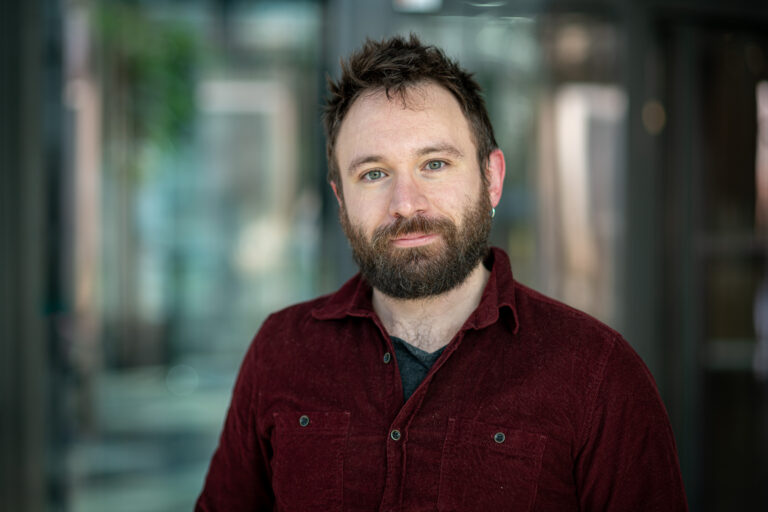
Our Data Stewards are central to NFDI4BIOIMAGE’s Community Support. Get to know them! In our social media campaign, “Meet the Data Stewards”, we introduce one member of our NFDI4BIOIMAGE Data Steward Team every month. This month, we are introducing Riccardo Massei, who works at the Helmholtz-Zentrum für Umweltforschung – UFZ in Leipzig.
Managing research data and publishing it in line with FAIR principles can be challenging, especially at the beginning of your scientific career. Nevertheless, it is a worthwhile effort, as it ensures the long-term findability, reusability, and transparency of your data – benefiting not only you but also the wider research community. Our data stewards are here to support you, and we look forward to hearing from you if you encounter any difficulties with your RDM process.
In his role as a data steward at NFDI4BIOIMAGE, Riccardo focuses on making high-content screening (HCS) data, e.g., from fish embryos, plankton, and cell lines FAIR and cloud-ready for which he uses tools such as OMERO, Python, Galaxy, and Jupyter notebooks. Here, Riccardo tells us about what challenge he had to overcome in his first data steward project.
As a Master’s student, I have always worked with zebrafish (Danio rerio) embryos, an alternative animal model widely used in toxicology and medical sciences. One of my first tasks as Data Steward was to correctly manage and share a HCS zebrafish dataset from the publication “Analysis of vascular disruption in zebrafish embryos as an endpoint to predict developmental toxicity”, a task which I considered a perfect starting point as it combined my scientific background with modern and innovative approaches to image data management developed in NFDI4BIOIMAGE.
The data was acquired using the VAST Bio-Image platform (Vertebrate Automated Screening Technology), designed for zebrafish researchers who need to image large numbers of zebrafish larvae. The VAST platform captures full-body images of the larvae, and the data is analyzed using a specialized software called FishInspector to annotate specific morphological regions of interest (ROI) in the zebrafish.
Initially, the data was simply stored in a network folder, making data management challenging, especially when trying to reuse the data in future studies. To address this, a proper data management workflow was developed targeting OMERO as the final storage location, enabling the storage of image data with ROIs and analysis files. This workflow includes two possible pathways: a manual approach using OMERO.insight for data upload, OMERO.web scripts for metadata annotation and file attachment, and a semi-automatic approach using workflow management systems (WMS) such as Galaxy and KNIME to automatically upload and annotate the data by executing a workflow. This approach was described in a publication in Scientific Reports. Both pathways allow users to choose the correct approach based on their personal knowledge and confidence with OMERO, Galaxy, and KNIME.
The data is now stored and correctly annotated in the OMERO UFZ instance. Users can execute workflows by following a detailed standard operating procedure or by running a specific workflow. This local annotation and management enable easy sharing of the dataset on the BioImage Archive (BIA), making the dataset reusable for external researchers who may want to utilize it for further scientific inquiries or train deep learning models for automatic morphological structure identification. Furthermore, this data management approach can be reused by scientists working with HCS zebrafish assays.
Watch a video of Riccardo introducing himself on LinkedIn here. Don’t hesitate to reach out to our Data Stewards via the Help Desk.