NFDI4BIOIMAGE News
23.10.2025
#Meet our Data Stewards: Mohsen Ahmadi
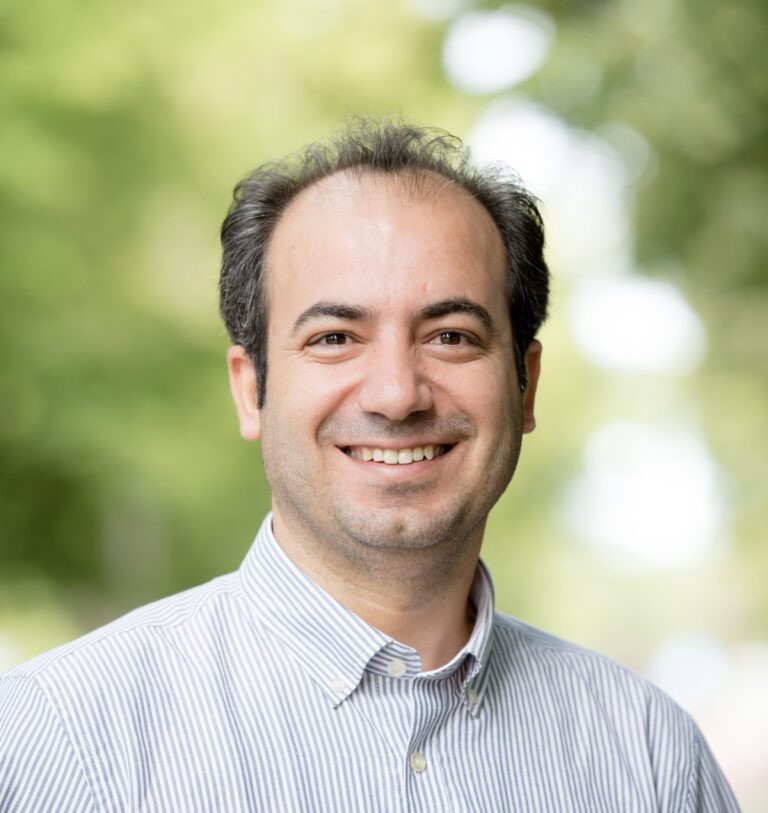
Our Data Stewards are central to NFDI4BIOIMAGE’s Community Support. Get to know them! In our social media campaign, “Meet the Data Stewards”, we introduce one member of our NFDI4BIOIMAGE Data Steward Team every month. This month, we are introducing Mohsen Ahmadi, who works at the Leibniz Institute for Plasma Science and Technology (INP Greifswald).
Building a FAIR-compliant workflow for bioimaging data management in plasma medicine
As a biochemist specializing in image microscopy in plasma medicine, Dr. Mohsen Ahmadi can assist as a data steward by connecting microscopy image data to the OMERO platform, sharing his knowledge of the minimum data requirements for microscopy imaging.
In plasma medicine, researchers generate vast amounts of microscopy data from complex biological experiments. To make these data reusable and reproducible, we developed a FAIR-compliant workflow that connects OMERO, eLabFTW, and Adamant into one integrated bioimaging data management pipeline.
When I started working on this project, plasma medicine research at INP generated rich bioimaging datasets, from cell cultures treated with cold plasma to 3D tumor models and tissue samples, but the data and metadata were often stored separately. This made it difficult to trace experimental context, compare results, or reuse datasets for analysis and AI-driven studies. The initial challenge was therefore to design a structured, FAIR-aligned workflow that could integrate imaging, metadata, and experimental records.
To achieve this, we, as part of NFDI4BIOIMAGE, built a workflow that combines OMERO, eLabFTW, and Adamant through their respective APIs. OMERO serves as the central repository for storing and organizing microscopy images. Experimental metadata are captured in eLabFTW and/or Adamant, depending on the level of detail required. Adamant exports metadata in JSON format and enables direct annotation of OMERO datasets, while microscope-specific acquisition parameters are recorded with Micro-Meta App and stored as modular metadata files.
One of the main challenges was aligning metadata schemas across different experiments (plasma treatment, biological experiments, and diagnostics) while ensuring compliance with the FAIR principles (Findable, Accessible, Interoperable, Reusable). To address this, we adopted standardized metadata practices, following the approaches established at INP Greifswald (Adamant).
The workflow not only supports reproducible plasma medicine studies but also can be used as the foundation for integrating bioimaging datasets into repositories. This system bridges the gap between raw image data and experimental context. For the broader research community, this approach demonstrates how FAIR data management can be achieved using open-source tools and structured programming environments.
To other researchers facing similar challenges, I recommend starting small, by linking a single dataset to metadata via APIs, and iteratively scaling to more complex workflows. FAIR data management is not an endpoint but an evolving practice that grows with community engagement and tool development.
Don’t hesitate to reach out to our Data Stewards via the Help Desk.